
Why Words Matter More Than We Think
Every fundraiser knows the moment:
You’re sitting across from a donor, the relationship is strong, the mission is clear… and then the conversation turns toward commitment. Suddenly, language becomes the determining factor. Not pressure. Not persuasion. Just words, the right words, delivered with intention.
This isn’t guessing.
It’s neuroscience.
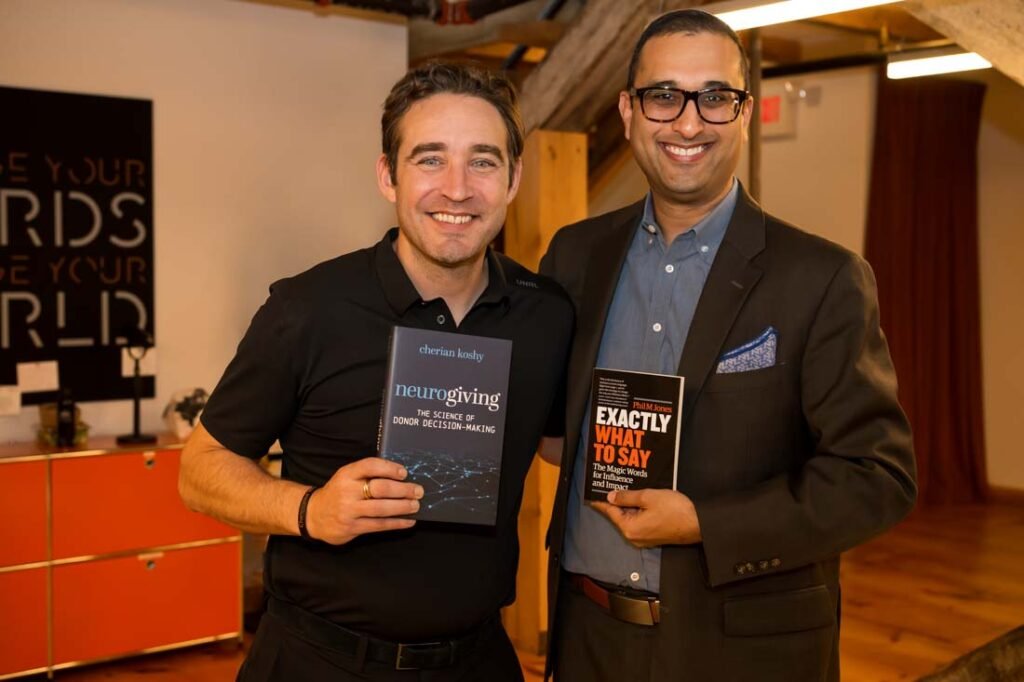
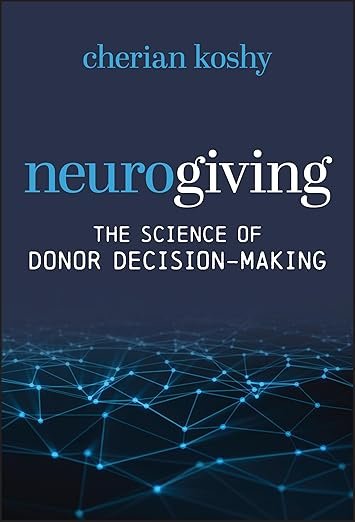
For the past several years, through my work as a Certified Guide and in Neurogiving, I’ve dug deep into the research on how humans make decisions about generosity. What I found is that donors don’t give because we craft perfect arguments. They give because something in the conversation helps their brain resolve uncertainty, reduce cognitive load, and feel psychologically safe enough to act.
And that is precisely where the principles of Exactly What to Say come alive for nonprofits.
Every act of generosity begins as a microscopic decision in the brain — one that is shaped, cued, and triggered by the words we use.
Your Donors Aren’t Logical — They’re Biological
Donor decisions are driven by a complex interplay of neural systems:
- The prefrontal cortex, responsible for decision-making and future simulation
- The limbic system, where emotions, empathy, and identity are centered
- The reward circuitry, including dopamine pathways activated by giving
Studies by Moll et al. (2006) showed that charitable giving stimulates the brain’s reward centers in ways similar to receiving monetary rewards. Other research by Zak (2013) demonstrated how oxytocin release enhances trust, empathy, and connection, all prerequisites for generosity.
This means donors are not weighing spreadsheets. They’re weighing meaning. Identity. Trust. Psychological safety. Social belonging.
Words are the switchboard connecting all of those systems.
The Problem: We Talk to Donors Like Analysts, Not Humans
In workshops with nonprofit teams, I often ask fundraisers to tell me about their last donor conversation. Almost every time, their instinct is to describe the data they shared, the impact metrics they reviewed, or the outcomes they reported.
But donors rarely make decisions because of information alone. They act because of interpretation, the way we help them make sense of information.
The magic of Phil M. Jones’ Exactly What to Say is that it reframes language as a tool for shaping that interpretation ethically and empathetically. Not to manipulate, but to help someone reach a decision that already aligns with who they want to be.
Magic Words Meet the Donor Brain
Let’s connect several EWTS principles directly to what we know about donor psychology:
1. “Just imagine…” and the brain’s future simulator
When you invite a donor to “Just imagine what’s possible…,” you activate the brain’s default mode network, the system responsible for mental time travel and prosocial future thinking (Buckner & Carroll, 2007).
It turns out imagination is one of the fastest paths to action and therefore actual gifts.
2. “Most people…” and the power of social proof
Humans are wired to follow group norms. Cialdini’s research on social proof is well known, but neuroscience backs it up: observing others’ choices activates the brain’s reward system and reduces uncertainty.
When a fundraiser says, “Most people who care about X choose to…” they’re not pressuring, they’re lowering cognitive risk to making a gift.
3. “Are you’re open-minded…” and identity alignment
This phrase moves the donor from defending their position to stepping into their ideal self-image. Research by Bryan et al. (2011) shows that identity-based framing increases prosocial behavior.
You’re not persuading. You’re affirming who they already believe themselves to be. Evidence indicates that most people believe themselves to be generous. You wouldn’t be in the conversation (nor would they) if there wasn’t a presumpion of generosity.
4. “What happens next is…” and clarity
Neuroscience shows ambiguity drains cognitive energy (Kahneman, 2011). When fundraisers create clear, low-friction next steps, donors feel more confident.
This is why the phrase “What happens next is…” reduces decision fatigue and increases follow-through. Often, fundraisers will ‘leave behind’ a piece to let donors ruminate on their decision. We feel like making someone decide quickly is an imposition. Research indicates that it’s what donors most want to do when they are inspired and emotionally engaged.
Language doesn’t change donors. It changes what their brains pay attention to — and that changes everything.
Ethical Influence: The Line Between Guidance and Manipulation
One of the major themes in Neurogiving is the ethical imperative to use influence responsibly. Fundraisers aren’t here to trick donors. We are here to steward their generosity.
The question isn’t How do we get donors to give?
It’s How do we help donors make decisions they feel great about both now and years later?
EWTS aligns beautifully with this philosophy because its principles are built around:
- respect
- autonomy
- clarity
- curiosity instead of pressure
These are the same psychological conditions that research shows increase donor satisfaction and long-term loyalty (Sargeant & Shang, 2010).
A Story From the Field
A few months ago, during a workshop with a statewide nonprofit coalition, one fundraiser shared that she often froze during donor meetings. She worried she was being “too pushy.” We role-played using EWTS language — specifically “How would you feel if…” and “What happens next is…”
When she tried the phrases in her next donor conversation, something shifted.
The donor leaned forwards. They talked longer. They explored possibilities instead of objections. And the donor increased their commitment, not because she pushed, but because she finally gave his brain the clarity it needed to move.
As she later told me:
“I didn’t raise more money because I tried harder. I raised more because I stopped trying to persuade.”
That’s the science at work.
And that’s Exactly What to Say in practice.
Designing Donor Conversations for the Modern Age
Fundraisers face increasing complexity: AI, digital fatigue, competing causes, and the erosion of trust in institutions. But despite the changing landscape, the human brain has remained remarkably consistent.
We are still wired for connection.
For meaning.
For stories.
For identity.
For generosity.
The future of fundraising won’t be driven by better technology alone, it will be driven by better conversations.
Conversations that honor the donor.
Conversations that reduce friction.
Conversations that create clarity.
Conversations that use words purposefully and ethically.
This is where neuroscience and EWTS intersect.
Fundraising is not about asking for money. It’s about helping someone move toward the person they want to be.
A Final Thought for Fundraisers
Whether you’re writing an email, sitting across from a major donor, or training your board for their next campaign, remember this:
Your words can make generosity easier.
Your words can make generosity feel safer.
Your words can shape decisions that change the world.
That’s not influence for influence’s sake.
That’s stewardship.
And nonprofits everywhere are discovering that when they combine the science of the donor brain with the principles of Exactly What to Say, their conversations, and their results, transform.